

Low Country Fair Trade
Devil's Trumpet- Night Blooming Moon Flower- Datura Innoxia - Seeds -USA
Devil's Trumpet- Night Blooming Moon Flower- Datura Innoxia - Seeds -USA
No se pudo cargar la disponibilidad de retiro
Datura Innoxia-Night Blooming
Also known as Devil's Horn, Devil's Trumpet, Moon Flower, and Jimson Weed.
The white and (sometimes) lavender-tinted, trumpet-shaped bloom of the sacred datura promises a wonderous garden of delicate beauty, moths, butterflies, long-tongued bees, hummingbirds, and magical moonlit nights. It gives rise to some of the plant’s other names, for instance, angel’s trumpet, devil's trumpet, moon lily, moon-flower, or belladonna (beautiful lady).
The sacred datura offers a stunning display of white and lavender trumpets, attracting moths, butterflies, bees, and hummingbirds. Also known as angel's trumpet, moon lily, or belladonna (beautiful lady), it promises enchanting moonlit nights in your garden fully opening after dusk. A true beauty with magical powers.
We grow this plant yearly and the seeds are harvested and stored in South Carolina. This plant is an annual and can be grown indoors, although it prefers outdoors in full sun most of the day and does well with some afternoon shade during the hot summer.
"Ingestion of the flowers or any other part of this plant can have dangerous, even fatal, consequences. All parts of the datura plant, also known as Devil's Trumpet or Jimson Weed, are poisonous. The seeds and young leaves of the plant contain the highest amount of toxic alkaloids.
Health officials say that similar or related plants, including Devil's Weed, Devil's trumpet, and Jimson Weed, often are referred to as moonflower and could have similar toxic effects. Within an hour of ingesting the moonflower plant, symptoms begin. Ingesting the plant causes agitation, confusion, and hallucinations.
- Species. See text. Datura is a genus of nine species of poisonous vespertine flowering plants belonging to the family Solanaceae. They are commonly known as daturas, but also known as devil's trumpets, not to be confused with angel's trumpets, its closely related genus Brugmansia.
Datura innoxia is an annual shruby plant that typically reaches a height of 0.6 to 1.5 meters. Its stems and leaves are covered with short and soft grayish hairs, giving the whole plant a grayish appearance. It has elliptical, smooth-edged leaves. All parts of the plant emit a foul odor similar to rancid peanut butter when crushed or bruised, although most people find the fragrance of the flowers to be quite pleasant when they bloom at night.
The flowers are white, trumpet-shaped, 12–19 cm (4.5–7.5 in) long. They first grow upright, and later incline downward. It flowers from early summer until late fall.
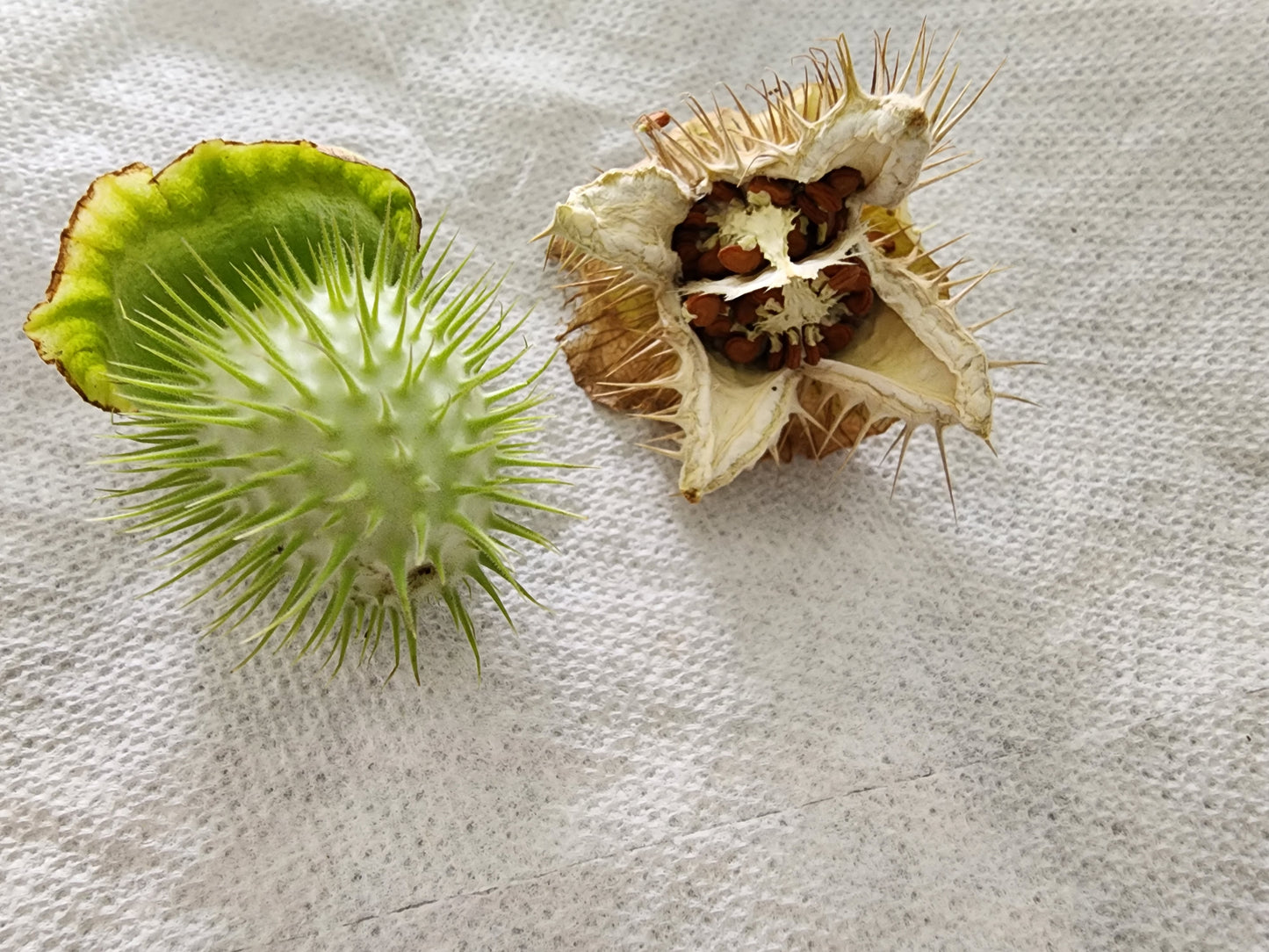
The fruit is an egg-shaped spiny capsule, about 5 cm in diameter. It splits open when ripe, dispersing the seeds. Another means of dispersal is by the fruit spines getting caught in the fur of animals, who then carry the fruit far from the mother plant. The seeds have hibernation capabilities and can last for years in the soil. The seeds, as well as the entirety of this plant act as a deliriant and have a high probability of overdose." Quoted from www.wikipedia.com
About the Artisans
About the Artisans
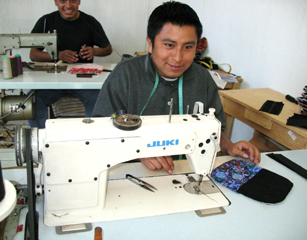 Ingrese a De Colores Art, una empresa local que nivela el campo de juego para los aldeanos al ofrecer capacitación gratuita a cualquiera que demuestre la iniciativa de aprender un oficio. La empresa emplea a 30 mujeres y 18 hombres para tejer y bordar productos textiles, con la opción de trabajar desde casa utilizando materiales proporcionados por la empresa. De Colores reconoce la cultura de sus empleados mayas, por lo que permite flexibilidad horaria y da tiempo libre para los días de siembra y cosecha.
De Colores también invierte en proyectos de educación comunitaria financiando dos escuelas locales en los pueblos vecinos de Chujupen y Pachoj y ofreciendo becas a estudiantes que califiquen.
Además de estimular la economía local mediante la creación de nuevos puestos de trabajo, De Colores hace un esfuerzo consciente por utilizar materiales reciclados siempre que sea posible. La razón de esto es doble: preservar la cultura maya, ya que los textiles reciclados muestran patrones de tejido tradicionales que no se ven a menudo en los textiles más nuevos, y reducir los desechos y el desperdicio.
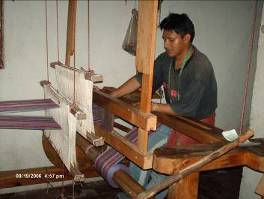
Las comunidades colaboran en el proceso de producción, ya que los hombres trabajan en los textiles más grandes y las mujeres hacen el bordado, el crochet y el macramé que se ven en piezas más pequeñas. En algunos casos, para ser competitivos, se utilizan máquinas de coser para ensamblar el producto terminado, aunque todos los componentes están hechos a mano y bordados a mano en algodón, lana y/o seda.