

OWP
Small Cinnamon Box w/ Om Symbol -Fair Trade- Vietnam
Small Cinnamon Box w/ Om Symbol -Fair Trade- Vietnam
Couldn't load pickup availability
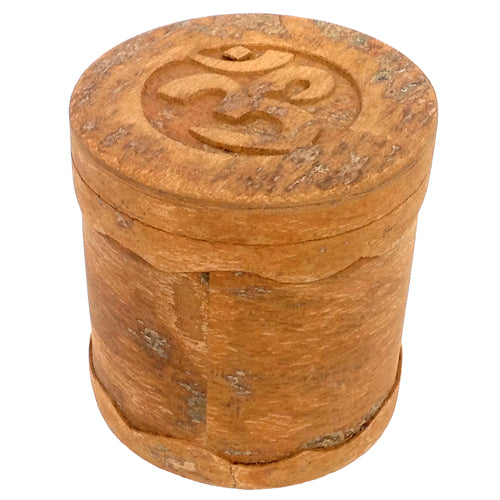
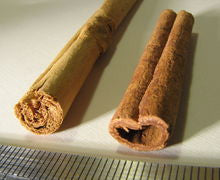
Made entirely from cinnamon bark, these boxes are traditionally used to store and keep loose tea fresh, or as gift boxes. The fragrance of cinnamon has numerous beneficial properties making it popular with many aroma-therapist. Because of its pleasant, warm, and strong aroma, cinnamon is often an ingredient in many potpourris and room fresheners.
This small cylindrical box with the mystical and sacred "OM" symbol carved on the lid is an excellent curio for keeps. OM is a symbol widely used in Hinduism, Buddhism, and other religions, symbolizing the three stages of life, birth, and death, and in some a singular God. The Cassia or cinnamon trees that are used to produce these boxes are a renewable resource and sustainably harvested. Let the soothing fragrance of cinnamon and the OM symbol together create an aura of peace and tranquility around you.
- Measures 3” high x 2 7/8” diameter
Handmade in Vietnam and fair trade imported.
Famous for spice, Cinnamon is obtained from the dried inner bark of an evergreen tree that belongs to the Cinnamomum genus. During ancient times, cinnamon was considered a precious possession and was often given as a gift to kings or gods. Historical evidence claims that cinnamon was presented at the temples of the Greek and Roman gods Apollo and Miletus. In modern times, cinnamon is used as a very important spice/condiment in various cuisines across the world.
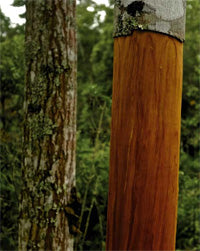
Cinnamon is yielded by growing the tree for 2-3 years and then coppicing it. Coppicing, a traditional method of woodland management, is the process of cutting the tree to the ground level and allowing it to grow again. The trees naturally reshoot from their stumps or roots, thus the tree is unharmed and regains its matured size. Cinnamon trees can yield productive barks for about 45 years, after which they are required to be replaced with a new seedling. Coppicing becomes an environmentally sustainable way to harvest cinnamon bark over and over again from the same tree.
To learn more about the artists at Au Lac and the techniques they use to create these eco-friendly holiday ornaments, click on "About the Artisans".
About the Artisans
About the Artisans
Chichicastenango, Guatemala, has become one of the most important heritage centers in Guatemala during the past 10 years, due to its predominant indigenous Maya Quiche population and their traditional textile products. Yet, despite increased tourism and a renewed interest in traditional Mayan crafts, work opportunities remain few for the indigenous population, many of whom are uneducated and otherwise unemployable.
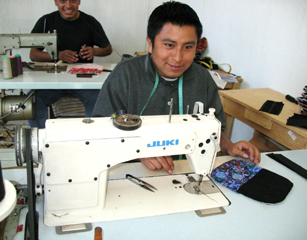 Enter De Colores Art, a local business that levels the playing field for villagers by offering free training to anyone who demonstrates the initiative to learn a trade. The company employs 30 women and 18 men to knit and embroider textile products, with the option of working at home using materials provided by the company. De Colores recognizes the culture of its Mayan employees, and as such allows flexible hours and gives time off for sowing and harvest days.
De Colores also invests in community education projects by funding two local schools in the neighboring towns of Chujupen y Pachoj, and by providing scholarships to qualifying students.
In addition to stimulating the local economy by creating new jobs, De Colores makes a conscious effort to use recycled materials whenever possible. The reason for this is twofold: to preserve Mayan culture, as recycled textiles showcase traditional knitting patterns that aren’t often seen in newer textiles, and to reduce scraps and waste.
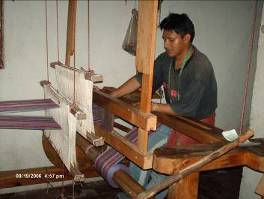
Communities collaborate in the production process, as men work on the biggest textiles and women do the embroidery, crochet and macramé seen in smaller pieces. In some cases, in order to be competitive, sewing machines are used to assemble the finished product, although all the components are handmade and hand embroidered from cotton, wool and/or silk.