

OWP
Recycled Wire Ball Ornament
Recycled Wire Ball Ornament
Couldn't load pickup availability
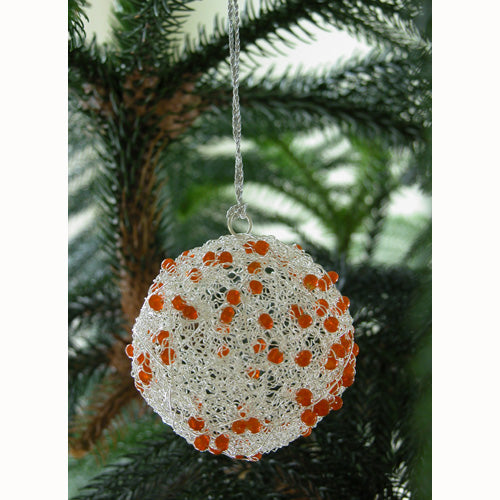
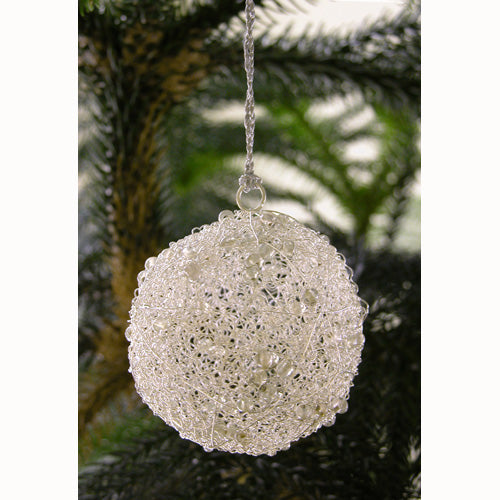
This holiday, create a winter wonderland in your living room with recycled wire ornaments from India, a bright idea for your holiday tree, wreath or as year-round window decoration. These earthfriendly designs have been handmade using recycled wire and beads by the artisans at Mohd Israil's workshop near Moradabad, India.
- 3D ornament measures approximately 3" in diameter
- Available in Red, Blue, Brown, Green, Orange and Clear
Handmade and fair trade imported from India.
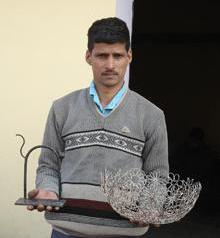 This item was handmade in India in a workshop sponsored by Noah’s Ark, an NGO that offers funding for raw materials, machines and workshop repairs to 100 artisan groups across India. In exchange for assistance, workshops must prove that all employees are paid fair wages for their products and work in safe and clean conditions. Noah's Ark also offers free classes in capacity building to its network of 600 artisans, a rigorous quality control check, and runs education and water sanitation projects to benefit the artisans’ children and the rest of the community. The company has established 20 new workshops in the past 15 years, and all employees are paid 10-15% above the local rate.
Noah’s Ark was founded by Mr. Samuel Masih in 1986 back before anyone was familiar with the concept of “Fair Trade.” A businessman from Moradabad, India, Masih observed his other business associates were taking a personal commission from the local metalworking artisans, on top of paying them very low wages for their work. This led to a distrustful and exploitative work environment, and inspired Masih to create a more collaborative environment based on trust and mutual respect.
After two difficult years, Samuel explained his objectives to Mrs. Sullivan of Sullivan Florist in the United 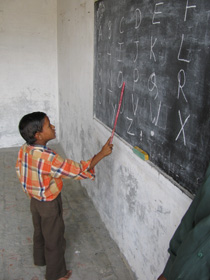 States, who immediately placed an order for US$ 70,000. This led to collaborations with other international companies, including Tear Fund, Artisanat-SEL, Goed Werk, TEAM and Oxfam Australia. Today, the company produces a US $1.5 million in exports and funds Noah's handicrafts and Welfare society, an artisan association created in 2000 to promote artisan welfare, capacity building, childhood education and social work.
About the Artisans
About the Artisans
Chichicastenango, Guatemala, has become one of the most important heritage centers in Guatemala during the past 10 years, due to its predominant indigenous Maya Quiche population and their traditional textile products. Yet, despite increased tourism and a renewed interest in traditional Mayan crafts, work opportunities remain few for the indigenous population, many of whom are uneducated and otherwise unemployable.
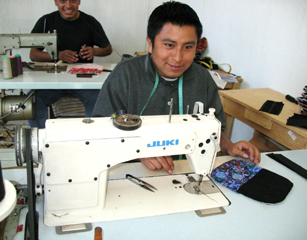 Enter De Colores Art, a local business that levels the playing field for villagers by offering free training to anyone who demonstrates the initiative to learn a trade. The company employs 30 women and 18 men to knit and embroider textile products, with the option of working at home using materials provided by the company. De Colores recognizes the culture of its Mayan employees, and as such allows flexible hours and gives time off for sowing and harvest days.
De Colores also invests in community education projects by funding two local schools in the neighboring towns of Chujupen y Pachoj, and by providing scholarships to qualifying students.
In addition to stimulating the local economy by creating new jobs, De Colores makes a conscious effort to use recycled materials whenever possible. The reason for this is twofold: to preserve Mayan culture, as recycled textiles showcase traditional knitting patterns that aren’t often seen in newer textiles, and to reduce scraps and waste.
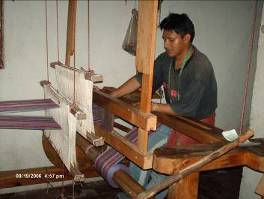
Communities collaborate in the production process, as men work on the biggest textiles and women do the embroidery, crochet and macramé seen in smaller pieces. In some cases, in order to be competitive, sewing machines are used to assemble the finished product, although all the components are handmade and hand embroidered from cotton, wool and/or silk.