


One World Projects
Juanita - Recycled Tire Clutch
Juanita - Recycled Tire Clutch
Couldn't load pickup availability
Compact is key with our cute Juanita clutch, whose petite frame is handmade from tire tubes discarded from car and truck tires in El Salvador. Just big enough for cell phones, money clips, credit cards and the car keys, Juanita is proof that to recycle is a beautiful thing.
- Measures 9 1/2 inches wide x 4 1/2 inches high x 2 inches deep
- 14 inch wrist strap
- Pinstriped cotton lining with zipper closure
Due to its recycled nature, no two bags are exactly the same. While measurements and designs are consistent, patterns on rubber will vary. Handmade in El Salvador and fair trade imported.
Uca Ruffatti - Making Tire Bags
Watch this video on how recycled tires in El Salvador are used to make handbags, wallets, and other useful items. Click here
 In Santa Ana, El salvador, discarded truck and car tires litter the road, ravines, and rivers, causing harm to the environment. Fortunately, one small artisan group, Uca Ruffatti, is not only helping to clean up the mess, but turning waste it into beautiful and functional works of art! Uca Ruffatti collects the inner tubes from the discarded tires and uses them to create handbags, purses, wallets and cosmetic bags in a variety of sizes and designs. The long-lasting toughness of the material contributes to the products' extensive life and durability. Some items are accented with recycled leather scraps and locally-grown cotton and indigo.
 The artisans at Uca Ruffatti have repurposed tires and car upholstery to create unique and environmentally friendly purses for the past 20 years. Artisans are free to employ their creative vision when producing the bags, so each item is unique and meticulously crafted, and of course, pleasing to look at and functional in form. As such, Uca Ruffatti's innovative product line has attracted attention in the United States and Europe, and owner Maria de los Angeles de Ruffatti plans to extend her modest workshop, which means even more artisans will have the opportunity for employment.
In March 2009, One World Projects was recognized by the Fair Trade Federation on behalf of their collaboration with Uca Ruffatti. The "Excellence in Product Design" award was given in recognition of Uca Ruffatti's outstanding work in the field of design, innovation, contemporary style, tastefulness and responsible use of materials in accordance with FTF's principles and values.
About the Artisans
About the Artisans
Chichicastenango, Guatemala, has become one of the most important heritage centers in Guatemala during the past 10 years, due to its predominant indigenous Maya Quiche population and their traditional textile products. Yet, despite increased tourism and a renewed interest in traditional Mayan crafts, work opportunities remain few for the indigenous population, many of whom are uneducated and otherwise unemployable.
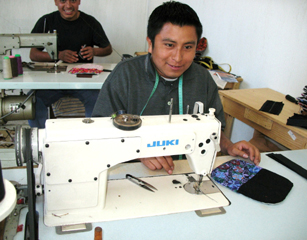 Enter De Colores Art, a local business that levels the playing field for villagers by offering free training to anyone who demonstrates the initiative to learn a trade. The company employs 30 women and 18 men to knit and embroider textile products, with the option of working at home using materials provided by the company. De Colores recognizes the culture of its Mayan employees, and as such allows flexible hours and gives time off for sowing and harvest days.
De Colores also invests in community education projects by funding two local schools in the neighboring towns of Chujupen y Pachoj, and by providing scholarships to qualifying students.
In addition to stimulating the local economy by creating new jobs, De Colores makes a conscious effort to use recycled materials whenever possible. The reason for this is twofold: to preserve Mayan culture, as recycled textiles showcase traditional knitting patterns that aren’t often seen in newer textiles, and to reduce scraps and waste.
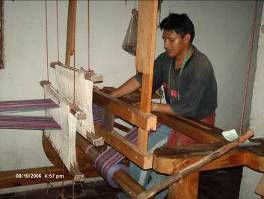
Communities collaborate in the production process, as men work on the biggest textiles and women do the embroidery, crochet and macramé seen in smaller pieces. In some cases, in order to be competitive, sewing machines are used to assemble the finished product, although all the components are handmade and hand embroidered from cotton, wool and/or silk.


