


One World Projects
White Ceramic Bunny Rabbit Bank
White Ceramic Bunny Rabbit Bank
Couldn't load pickup availability
This round Rabbit Bank is Handmade by artisans outside of Lima, Peru of natural raw materials including locally sourced clay and plant dyes.
- Measures 5-1/2" high x 4-3/8" wide x 5-1/4" deep
- Removeable rubber stopper on bottom
Handmade in Peru and fair trade imported.

Aptec Peru is an artisan collective located near Lima, Peru. The organization is a community of 16 family workshops that employs about 140 individuals from low-income areas. The extensive skills of the artisans are seen through the range of products they create, including ceramics, jewelry, textiles, stained glass and woodwork.
Besides helping preserve a culture rich in tradition, the collective helps artisan producers better design and create high quality crafts, enjoy increased sales and earn a steady income. As a member of the International Fair Trade Assocation, APTEC Peru ensures artisans are paid fairly for their work, which creates a sustainable working environment for artisans, their families and communities.
Their mission
APTECPERU looks forward to promote and develop Peruvian handcrafts aiming to improve artisans producers’ life standards and security through a fair trade and better trade conditions. Also looks that the production processes are respectful with the environment and the ecology.
Their vision
Be a leader organization in the development and commercialization of Peruvian handcrafts and satisfy the life standards of their members.
The artisan families that work with Aptec Peru are also invested in the care and maintenance of their natural resources. Their products are made of natural raw materials such as clay, dried gourds, recycled glass and plant dyes. In addition, the artisans take care to harvest all materials in a sustainable manner, to replenish plant life and maintain water quality. As part of the World Day of the Fair Trade project, the artisans crafted porous ceramic pots that were filled with plants and donated them to 400 families in the village of Nuevo Ayacucho, providing clean air for the community.
Aptec Peru's artisans take great pride in their intricate textiles, beautiful ceramic pots and vases, silver jewelry and creative gourd decorations. In turn, these crafts, and loyal buyers like yourselves, help the artisans create a sustainable income and future.
About the Artisans
About the Artisans
Chichicastenango, Guatemala, has become one of the most important heritage centers in Guatemala during the past 10 years, due to its predominant indigenous Maya Quiche population and their traditional textile products. Yet, despite increased tourism and a renewed interest in traditional Mayan crafts, work opportunities remain few for the indigenous population, many of whom are uneducated and otherwise unemployable.
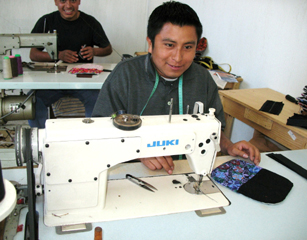 Enter De Colores Art, a local business that levels the playing field for villagers by offering free training to anyone who demonstrates the initiative to learn a trade. The company employs 30 women and 18 men to knit and embroider textile products, with the option of working at home using materials provided by the company. De Colores recognizes the culture of its Mayan employees, and as such allows flexible hours and gives time off for sowing and harvest days.
De Colores also invests in community education projects by funding two local schools in the neighboring towns of Chujupen y Pachoj, and by providing scholarships to qualifying students.
In addition to stimulating the local economy by creating new jobs, De Colores makes a conscious effort to use recycled materials whenever possible. The reason for this is twofold: to preserve Mayan culture, as recycled textiles showcase traditional knitting patterns that aren’t often seen in newer textiles, and to reduce scraps and waste.
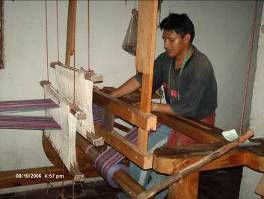
Communities collaborate in the production process, as men work on the biggest textiles and women do the embroidery, crochet and macramé seen in smaller pieces. In some cases, in order to be competitive, sewing machines are used to assemble the finished product, although all the components are handmade and hand embroidered from cotton, wool and/or silk.


