One World Projects
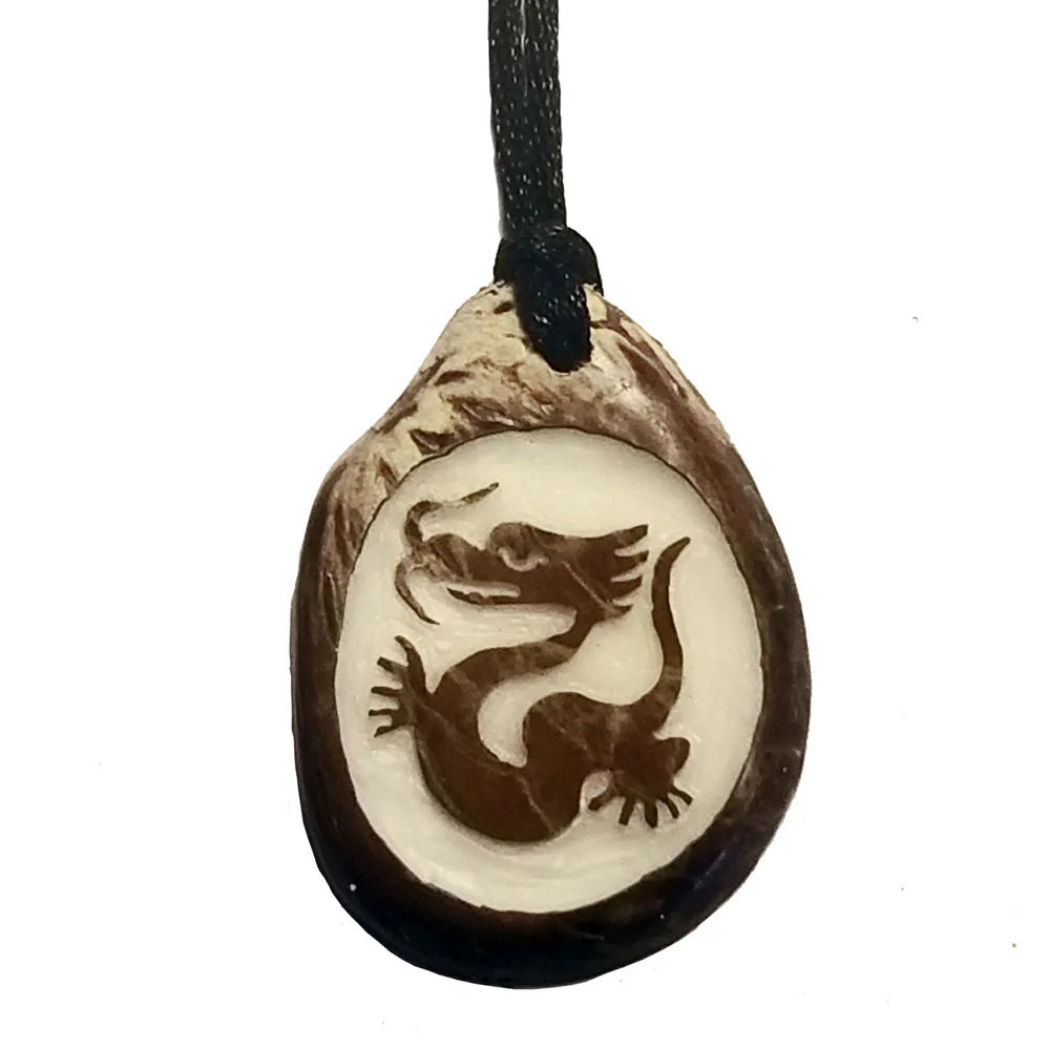
Tagua Nut Sliced Pendants
Tagua Nut Sliced Pendants
No se pudo cargar la disponibilidad de retiro
If you both love the rain forest and keeping animal ivory on real animals where it belongs, you'll love our handcarved Tagua Pendants from Ecuador.
Tagua nut, a renewable rainforest seed that grows from the Amazon's Tagua Palm Tree, is widely regarded as vegetable ivory for its likeness to real animal ivory, but with animal and habitat-friendly properties. With the growing scarcity of animal ivory, Tagua has become a highly valued commodity by artisans and consumers alike.
- Measures approximately 1-5/8" x 1-1/4"
Handmade in Ecuador and Fair Trade imported.
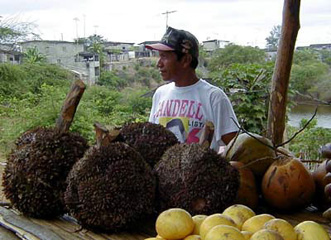 Ecuador, the smallest of South America's countries, owes its unique biodiversity to its geographical setting and climate; a hybrid area of Pacific Coast beaches, sweltering rainforests, the UNESCO-protected Galapagos Islands and the snow-capped volcanoes of the Andean highlands. Sadly pollution, deforestation and global warming have threatened one of the World's most diverse ecosystems.
Fortunately, the collection and harvesting of tagua nut, a rainforest nut known as vegetable ivory for its likeness to animal ivory, has emerged as a viable alternative for villagers who once depended on logging, wildlife trafficking and other unsustainable activities to earn a living. Tagua's smooth, hard texture offers artisans an ideal medium for carving jewelry, boxes and other figurines, and helps keep animal ivory on real animals where it belongs. Harvesting tagua also encourages locals to depend on the rainforest for their livelihoods, which motivates them to better protect and conserve this part of the Amazon, thereby saving thousands of acres of trees, plants and wildlife habitat. With the near extinction of animal ivory, tagua has become a highly valued commodity by artisans and consumers alike.
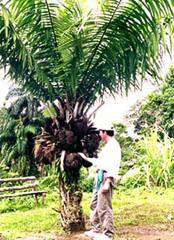
Tagua nuts are actually seeds that grow in pods called cabezas from the tagua nut palm tree. Villagers are paid to collect the cabezas, which ripen and fall naturally onto the rainforest floor, and then harvest the seeds for artisans who will transform them into beautiful beads, jewelry, figurines and other works of art.
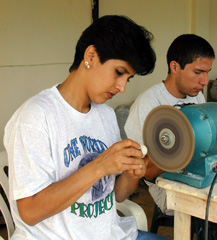
There are five steps involved in creating a tagua nut figurine: shaping, detailing, sanding, polishing and drying. Shaping is achieved using a circular sand paper with a very coarse grit. The piece is detailed with a Dremel tool and various bits and sanded with a fine sand paper. Next, the figurine is polished with a buffing cloth and a light polishing compound, and finally placed beneath paper or a towel to dry under a heat lamp for 24 hours. This is similar to incubating a chicken egg - not too hot, just nice and warm - and ensures the carvings won't crack later.
Tagua is colored in many ways:
1. Boiling. Artisans achieve rich yellows and browns by boiling; this process essentially burns the tagua. The length of boiling time determines the color.
2. Inlay. Artisans inlay their carvings with the brown skin of the tagua nut, which is first ground into a fine powder, then mixed with super glue and reapplied to the carving's recesses.
3. Fermentation. Fermented tagua is yellow to chocolate in color and produced when unpeeled tagua is left in the rain to ferment. This rots the shell and discolors the tagua nut inside.
4. Burning. Sometimes burning, particularly in jewelry, is accomplished with a wood burning tool. This turns the tagua black and allows the artisan to etch designs into the tagua.
5. Dying. Many of our tagua nut beads are dyed. The tagua is placed in boiling water with the dye and the nut soaks in the color. Many of these colors are achieved through the use of natural plant-based dyes.
Some artisans also paint or stain their pieces, but we feel these techniques detract from the overall piece by covering up the tagua's natural beauty. As such, all of our colors are achieved using one of the methods mentioned above. It's also important to note that, like animal ivory, most tagua will darken or antique over time, although the rate of discoloration seems related to the nut's moisture content. For example, tagua carvings that haven't been through the final drying phase yellow more rapidly than completely dried pieces, while exposure to sunlight speeds up discoloration.
 Naya Nayon, an Ecuador-based NGO, counters poverty and deforestation by creating new jobs that depend on conservation and responsible forest management. To accomplish this goal, the company works with 23 local artisans to create figurines, jewelry and ornaments from tagua nuts. These nuts grow year-round in Ecuador and can be harvested without detriment to the rainforest. Naya Nayon gives its artisans all the training, tools and materials they need to work from home, and then manages work distribution from the organizations main office to make sure orders are fairly distributed.
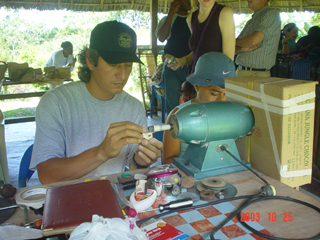 Naya Nayon's artisans work in home-based workshops throughout the country. Within each workshop, which is usually attached to an artisan's home, one artisan serves as the leader/manager and hires family members and friends to help produce products. New artisans begin by sanding and polishing figurines made by the more experienced artisans, and then gradually progress into the more complicated aspects of the craft, such as detailing, burning/coloring, and finally shaping the crude form of the nut. As demand and production increases, more artisans are invited to join the workshop. When the workshop grows to about 8 people, an experienced worker leaves to form a new workshop and train new artisans, and the cycle of learning continues.
Despite their humble backgrounds, many of Naya Nayon's artisans are highly educated with university degrees in engineering, law, business, and medicine. Unfortunately, Ecuador's shaky economy means jobs are scarce, even for highly-qualified professionals. Thankfully, Tagua nut carving has emerged as a sustainable alternative and is often the primary source of income for an artisan's family.
About the Artisans
About the Artisans
Naya Nayón - Ecuador
Las técnicas
La tagua se colorea de muchas maneras:
1. Hervir. Los artesanos logran intensos amarillos y marrones hirviéndolos; este proceso esencialmente quema la tagua. La duración del tiempo de ebullición determina el color.
2. Incrustación. Los artesanos incrustan sus tallas con la piel marrón de la nuez de tagua, que primero se muele hasta obtener un polvo fino, luego se mezcla con superpegamento y se vuelve a aplicar en los huecos de la talla.
3. Fermentación. La tagua fermentada es de color amarillo a chocolate y se produce cuando la tagua sin pelar se deja fermentar bajo la lluvia. Esto pudre la cáscara y decolora la nuez de tagua del interior.
4. Ardor. A veces, la quema, especialmente en joyería, se realiza con una herramienta para quemar madera. Esto vuelve la tagua negra y permite al artesano grabar diseños en la tagua.
5. Morir. Muchas de nuestras cuentas de nuez de tagua están teñidas. La tagua se coloca en agua hirviendo con el tinte y la nuez se empapa del color. Muchos de estos colores se logran mediante el uso de tintes naturales de origen vegetal.
La Historia Artesanal Naya-Nayon- Ecuador
Na ya Nayon, una ONG con sede en Ecuador, contrarresta la pobreza y la deforestación creando nuevos empleos que dependen de la conservación y el manejo forestal responsable. Para lograr este objetivo, la empresa trabaja con 23 artesanos locales para crear figuritas, joyas y adornos a partir de nueces de tagua. Estas nueces crecen todo el año en Ecuador y se pueden cosechar sin perjudicar la selva tropical. Naya Nayon brinda a sus artesanos toda la capacitación, herramientas y materiales que necesitan para trabajar desde casa y luego administra la distribución del trabajo desde la oficina principal de la organización para garantizar que los pedidos se distribuyan de manera justa.
Ecuador, el más pequeño de los países de América del Sur, debe su biodiversidad única a su entorno geográfico y clima; un área híbrida de playas de la costa del Pacífico, bosques tropicales sofocantes, las Islas Galápagos protegidas por la UNESCO y los volcanes nevados de las tierras altas de los Andes. Lamentablemente, la contaminación, la deforestación y el calentamiento global han amenazado uno de los ecosistemas más diversos del mundo.
Afortunadamente, la recolección y cosecha de nuez de tagua, una nuez de la selva tropical conocida como marfil vegetal por su parecido con el marfil animal, ha surgido como una alternativa viable para los aldeanos que alguna vez dependieron de la tala, el tráfico de vida silvestre y otras actividades insostenibles para ganarse la vida. La textura suave y dura de la tagua ofrece a los artesanos un medio ideal para tallar joyas, cajas y otras figurillas, y ayuda a mantener el marfil animal en animales reales en el lugar que corresponde. La recolección de tagua también alienta a los lugareños a depender de la selva tropical para su sustento, lo que los motiva a proteger y conservar mejor esta parte del Amazonas, salvando así miles de acres de árboles, plantas y hábitat de vida silvestre. Con la casi extinción del marfil animal, la tagua se ha convertido en un producto muy valorado tanto por los artesanos como por los consumidores.
Las nueces de tagua son en realidad semillas que crecen en vainas llamadas C abezas de la palmera tagua. A los aldeanos se les paga para recolectar las Cabezas, que maduran y caen naturalmente en el suelo de la selva tropical, y luego cosechan las semillas para los artesanos que las transformarán en hermosas cuentas, joyas, figuritas y otras obras de arte.
Hay cinco pasos involucrados en la creación de una figura de nuez de tagua: darle forma, detallar, lijar, pulir y secar. El modelado se consigue utilizando una lija circular de grano muy grueso. La pieza se detalla con una herramienta Dremel y varias brocas y se lija con un papel de lija fino. A continuación, la figura se pule con un paño para pulir y un compuesto de pulido ligero y, finalmente, se coloca debajo de papel o una toalla para que se seque bajo una lámpara de calor durante 24 horas. Esto es similar a incubar un huevo de gallina (no demasiado caliente, sólo agradable y tibio) y garantiza que las tallas no se rompan más tarde.
Los artesanos de Naya Nayon trabajan en talleres a domicilio en todo el país. Dentro de cada taller, que generalmente está adjunto a la casa de un artesano, un artesano actúa como líder/gerente y contrata a familiares y amigos para ayudar a producir productos. Los nuevos artesanos comienzan lijando y puliendo figuras hechas por artesanos más experimentados, y luego progresan gradualmente hacia los aspectos más complicados de la artesanía, como detallar, quemar/colorear y, finalmente, dar forma a la forma tosca de la nuez. A medida que aumenta la demanda y la producción, se invita a más artesanos a unirse al taller. Cuando el taller crece a unas 8 personas, un trabajador experimentado se marcha para formar un nuevo taller y formar nuevos artesanos, y el ciclo de aprendizaje continúa.
A pesar de sus orígenes humildes, muchos de los artesanos de Naya Nayon tienen un alto nivel educativo y títulos universitarios en ingeniería, derecho, negocios y medicina. Desafortunadamente, la inestable economía de Ecuador significa que los empleos son escasos, incluso para los profesionales altamente calificados. Afortunadamente, el tallado de nueces de Tagua ha surgido como una alternativa sostenible y, a menudo, es la principal fuente de ingresos para la familia de un artesano.